PS5 and PS4 Players Report New 30-Day Online Check for Digital Games
Meta Description: PS5 and PS4 users are reporting a new 30-day online check for recently purchased digital games, sparking debate over DRM, offline access, and PlayStation ownership rights.
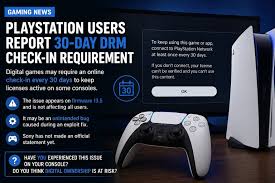
A new PlayStation licensing issue is getting attention from PS5 and PS4 owners. According to recent player reports, some newly purchased digital games may now require the console to connect to the internet at least once every 30 days. If the console stays offline too long, access to certain digital titles could be blocked until the license is verified again.
The situation has not yet been fully explained by Sony, which makes the issue difficult to judge. It may be an intentional change to PlayStation’s digital rights system, or it may be a bug caused by recent system updates. Either way, the reports have restarted one of gaming’s biggest arguments: what do players really own when they buy a digital game?
For people who keep their consoles online all the time, the answer may seem unimportant. But for players who care about preservation, offline gaming, travel, rural access, or long-term ownership, a 30-day check could be a meaningful change.
What Players Are Reporting
Multiple PlayStation users have reported that newer digital purchases from the PlayStation Store now show signs of a 30-day license timer. This timer appears to indicate when the system must reconnect online to confirm the game license.
Reports suggest that digital games purchased before March 2026 may not be affected. Newer purchases, however, may include the timer. On PS4, some users say the timer is visible. On PS5, the timer may not be shown clearly, but it may still exist in the background.
If true, this means that a digital game could be fully downloaded and installed, but still become unavailable if the console cannot connect to PlayStation’s servers within the required window. Once the console reconnects and verifies the license, access should return.
Why a 30-Day Check Is Controversial
The controversy comes from the difference between buying a game and being granted access to a game. Many players think of a digital purchase as something they own. In practice, digital storefronts usually operate through licenses. The platform grants the user permission to access the game through an account.
That distinction matters when online verification is required. If a single-player game needs to check in with PlayStation servers every month, then the player’s access depends on more than just owning the console and downloading the game. It also depends on internet access, account systems, and Sony’s licensing servers.
For some players, that may feel like a small inconvenience. For others, it feels like a major limitation. A game that can stop working after 30 offline days may not feel like a permanent purchase.
Who Could Be Affected?
Most PlayStation owners probably connect their systems to the internet often enough that they may never notice the issue. Consoles commonly go online for updates, cloud saves, trophies, multiplayer, store browsing, media apps, and game patches.
However, there are many situations where a player could be offline for more than 30 days. Someone may live in an area with poor internet. A family may take a console to a vacation home with no connection. A player may travel for work or military service. A collector may keep a console disconnected to preserve a specific firmware version. A household may lose internet after a storm, disaster, or financial hardship.
In those cases, an online license check could turn a purchased digital game into something temporarily inaccessible. That is why the issue matters even if it only affects a small percentage of users.
Digital Games Versus Physical Copies
The reports currently focus on digital games bought from the PlayStation Store. Physical games are different because the disc usually acts as the license key. As long as the disc is inserted, the console can confirm that the player has access to the game.
That does not mean physical games are always perfect for preservation. Many modern discs still require large updates, online patches, or downloadable content. Some physical editions do not include the complete game on the disc. But in general, physical copies can offer stronger offline access than digital purchases.
If Sony has added a recurring online check to newer digital purchases, some players may become more interested in buying physical editions. This is especially true for single-player games that people want to keep playable for years.
Is This Really DRM?
Yes, if the reports are accurate, a 30-day online license requirement would be a form of DRM. DRM stands for digital rights management, and it refers to systems that control access to digital content.
DRM is not automatically unusual. Digital storefronts use licenses to make sure accounts can only access games they own. The controversial part is not the existence of a license system. The controversial part is the possibility of recurring online verification for games that players may expect to work offline.
Players often accept an initial online check when downloading a game. They may be less willing to accept a system that repeatedly checks ownership every month, especially if Sony does not clearly communicate the rule.
The Xbox One Comparison
This debate reminds many players of the original Xbox One controversy in 2013. Before that console launched, Microsoft planned to require regular online checks for game licenses. The idea was heavily criticized because players feared losing access to games if they could not connect to the internet.
Microsoft eventually changed its policy before launch, but the backlash became one of the most memorable moments in modern console history. Sony even benefited from that moment by positioning the PlayStation 4 as a more traditional console that supported disc-based ownership and offline play.
That history is one reason PlayStation players are reacting strongly now. Even a limited 30-day check touches the same fear that defined the Xbox One backlash: the fear that consoles may become less reliable when offline.
Could This Be a Bug?
It is still possible that the 30-day timer is not an intentional policy change. Firmware updates can introduce bugs, and licensing systems can behave strangely when backend rules change. There may also be differences based on account settings, console activation, game type, region, or purchase date.
The fact that older purchases may not be affected makes the situation more complicated. It could point to a new policy for recently purchased games, but it could also indicate a technical issue with how new licenses are being assigned.
Until Sony gives a direct explanation, players should avoid assuming the worst. At the same time, the concern is reasonable. If a console shows or tracks a 30-day license timer, users deserve to know why.

How to Reduce the Risk of Losing Access
Players who are worried about offline access can take a few steps while waiting for more information. The most important is to connect the console to the internet before going offline for a long period. This should refresh licenses if the system is using a timed check.
Players should also make sure their PS5 has Console Sharing and Offline Play enabled, or that their PS4 is activated as the primary console for the account. These settings can affect how digital licenses work when the system is offline.
It may also be wise to test important digital games before traveling or disconnecting a console for an extended period. If a game refuses to launch offline, reconnecting before departure could prevent problems later.
For players who prioritize long-term access, physical copies may still be the safer choice when available. Digital libraries are convenient, but they are more dependent on platform rules.
Why Sony Needs to Clarify the Situation
The biggest problem right now is the lack of clarity. Players should not have to guess whether their purchased games will work after a month offline. If this is a bug, Sony should acknowledge it and fix it. If it is intentional, Sony should explain exactly how it works.
Important questions remain unanswered. Does the timer apply to all new digital games? Does it affect free monthly PlayStation Plus games? Does it apply differently to primary and secondary consoles? What happens if PlayStation servers are unavailable? Will the timer appear clearly on PS5 in the future?
Clear answers would help reduce confusion and rebuild trust. Digital storefronts rely on confidence. If players feel uncertain about what they are buying, they may hesitate to spend money on digital games.
The Bigger Issue: Game Preservation
This controversy also connects to the larger problem of game preservation. As more games move toward digital-only distribution, long-term access becomes more fragile. Storefronts can close. Licenses can change. Servers can shut down. Accounts can be banned or compromised. Hardware can fail.
A 30-day check may seem minor today, but it raises questions about what happens years from now. Will players still be able to access these games if Sony changes its infrastructure? Will a downloaded single-player game remain playable on an old console if it cannot verify a license?
These questions matter not only to collectors, but also to anyone who believes purchased games should remain playable beyond a console generation.
Final Thoughts
The reported 30-day online license check for newer PS4 and PS5 digital games is not guaranteed to affect every player, but it is still worth paying attention to. If real, it could change how PlayStation users think about digital purchases, offline play, and long-term ownership.
For now, the best approach is to stay cautious. Keep your console connected when possible, enable offline play settings, and consider physical copies for games you want to preserve. Most importantly, wait for Sony to clarify whether this is a bug or an intentional licensing change.
Digital gaming is convenient, but players need transparency. When people buy a game, they should know what conditions are attached to that purchase. Until Sony explains the 30-day timer, the debate over PlayStation digital ownership is unlikely to disappear.