Magic: The Gathering Reality Fracture Explained: Jace, the Echoverse, Hexhaven, and a Universe Rewritten
Meta Description: Magic: The Gathering Reality Fracture introduces Jace’s Echoverse, alternate planes, Hexhaven, color-swapped Planeswalkers, and a bold new chapter for MTG’s multiverse story.
Magic: The Gathering is preparing for one of its most ambitious in-universe sets in years. The upcoming set, Reality Fracture, puts Jace Beleren back at the center of the story in a dramatic way. After years of existing more as a legendary figure than a constant lead character, Jace is returning with enough power and mystery to reshape the universe itself.
The major hook of Reality Fracture is the Echoverse, an alternate reality created by Jace after he assumes a new identity known as The Theorist. This new universe is not simply a small pocket dimension or temporary magical illusion. It appears to be a full alternate version of Magic’s reality, containing different versions of planes, characters, schools, and histories that fans already know.
For longtime MTG players, that immediately raises a huge question: what happens when some of Magic’s most iconic characters are rewritten into “better” versions of themselves?
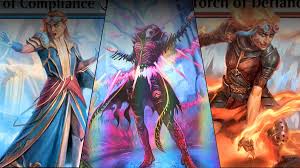
Jace Beleren Returns as The Theorist
Jace has always been one of Magic’s most recognizable characters. As a blue-aligned mind mage, strategist, and former face of the franchise, his choices have shaped major storylines across the multiverse. Reality Fracture pushes him into a new role, giving him the title The Theorist and placing him in control of a reality-changing concept.
The reason Jace creates the Echoverse has not been fully revealed, but the emotional stakes appear serious. The set hints at a story built around regret, idealized outcomes, and the dangerous desire to repair what cannot easily be repaired. This makes Reality Fracture feel less like a simple alternate-universe gimmick and more like a deeply personal story about control, grief, and consequences.
Jace is not merely observing the Echoverse. He is shaping it. That makes him both creator and possible threat. If he believes he can improve the people and worlds around him, the line between heroism and manipulation becomes dangerously thin.
What Is the Echoverse?
The Echoverse is an alternate universe containing different versions of existing Magic planes. In theory, every plane has an Echoverse counterpart, though Reality Fracture will focus mainly on an alternate version of Arcavios, the plane best known for Strixhaven University.
In this rewritten Arcavios, Strixhaven has been replaced by Hexhaven. That single change already tells players a lot about the set’s design philosophy. Reality Fracture is not just asking, “What if these characters looked different?” It is asking, “What if the foundations of entire institutions changed?”
The Echoverse gives Wizards of the Coast a way to revisit familiar ideas through a new lens. Characters can be redesigned. Schools can be restructured. Mechanics can be adjusted. Colors can shift. But the key is that these changes still need to feel connected to Magic’s core identity.
Hexhaven Replaces Strixhaven
One of the biggest reveals in Reality Fracture is Hexhaven, an alternate version of Strixhaven. The original Strixhaven is built around five enemy-color colleges. Hexhaven changes that formula by focusing on allied-color pairings instead.
The five Hexhaven schools are:
- Fatehold, School of Future History – blue-white
- Theorix, School of Esoteric Mathematics – blue-black
- Stingerquill, School of Painful Words – black-red
- Konstrari, School of Constructive Arts – red-green
- Vigorbloom, School of Invasive Healing – green-white
This is a clever twist because it gives players something familiar and unfamiliar at the same time. Strixhaven fans will recognize the magical school structure, but the color philosophy has changed. That shift opens the door for new mechanics, new faction identities, and new deck-building strategies.
Color-Swapped Characters Take the Spotlight
Reality Fracture also reimagines several of Magic’s most famous characters through the Echoverse. These alternate versions are not random palette swaps. They represent versions of characters shaped by different histories, different choices, and different emotional outcomes.
The most striking example revealed so far is Chandra. In the main Magic universe, Chandra is fiery, impulsive, passionate, and deeply tied to red mana. In the Echoverse, Jace imagines a calmer, more controlled version of her. This version did not experience the same traumatic loss that shaped her original life, and as a result, she did not unlock her pyromancy in the same way.
Her new card, Chandra, Chill of Compliance, reflects that rewritten identity. It is not simply Chandra with a different color pasted on top. It is Chandra reinterpreted through a new emotional and mechanical lens.
Wizards of the Coast has also confirmed that Vraska, Liliana, Ajani, and Garruk will receive Echoverse-style versions. For collectors and competitive players alike, these alternate versions could become some of the most talked-about cards in the set.
Reality Fracture Is Not Planar Chaos 2
Whenever Magic experiments with color identity, many players immediately think of Planar Chaos. That older set famously pushed the color pie in unusual directions, sometimes creating cards that felt exciting but dangerous from a design standpoint.
Reality Fracture appears to be much more controlled. The design team is not simply moving abilities from one color to another without adjustment. Instead, the goal is to reinterpret cards and mechanics in ways that make sense for their new colors.
For example, if a card concept moves from blue to red, it should not keep every blue-style feature. It may lose effects like card draw or scrying and gain something more appropriate for red, such as haste, direct damage, or impulsive action. This approach helps keep the color pie intact while still allowing creative experimentation.
Echoverse Cards in Every Pack
Another important feature is the pack structure. Wizards wants players to understand the relationship between original cards and Echoverse versions. To make those comparisons clearer, the team aims to include both a regular version and an Echoverse version of select cards in each pack.
This is smart for accessibility. Not every player knows every older Magic card by memory. By presenting original and alternate versions together, the set makes the differences easier to understand. Echoverse cards will also include a special sigil, marking them as separate from Magic’s main universe.
Why Reality Fracture Could Be a Major Turning Point
Reality Fracture seems designed as both a conclusion and a beginning. Wizards has described it as the epic conclusion of the arc that began with Wilds of Eldraine, but the Echoverse concept feels large enough to open many new doors.
The set gives Magic a way to explore alternate characters, alternate planes, and alternate design spaces without fully replacing the main continuity. It also gives players a strong “what if?” fantasy: what if beloved characters had different lives, different colors, and different powers?
Final Thoughts
Magic: The Gathering Reality Fracture could become one of the most memorable story-driven MTG sets in recent years. By bringing Jace back as The Theorist, introducing the Echoverse, replacing Strixhaven with Hexhaven, and reimagining iconic characters like Chandra, Vraska, Liliana, Ajani, and Garruk, Wizards of the Coast is taking a major creative risk.
If the set balances flavor, mechanics, and color-pie discipline, Reality Fracture could deliver something rare: a Magic set that feels nostalgic, experimental, emotional, and mechanically fresh at the same time.
For players who love alternate realities, powerful Planeswalkers, magical schools, and big multiverse stories, Reality Fracture may be the set that changes everything.